Essential Checks Before Booking a Dune Buggy Ride in Dubai
What to look into before you book
A dune buggy ride across the red sands of Dubai is one of those experiences that looks thrilling in every video and photo. The open desert, the steep dunes, the rush of the engine - it is easy to get swept up and book the first tour you see. But not every operator, vehicle or itinerary is the same. Before you confirm a booking, it pays to check a few practical details that separate a great day out from a frustrating one. Below are the points worth verifying, each with a short reason why it matters.
Vehicle condition and type
The buggy itself is the most important piece of equipment in the trip. Old, poorly maintained machines can turn an exciting ride into a series of breakdowns or, worse, a safety risk. Ask the operator what model and year the buggies are. A reputable outfit will be happy to tell you. Look for signs of care: clean vehicles, no visible oil leaks, working seat belts, and proper roll cages. Buggy types vary too. Some are two-seaters, some carry four. If you plan to share the driving with a friend or partner, check that the buggy allows both of you to swap seats easily. A solo driver who wants full control might prefer a single-seat model for better manoeuvrability on sharp dunes.
Why condition matters
A tired buggy with worn suspension or low tyre pressure handles poorly on soft sand. It can get stuck, slide sideways on a slope, or overheat mid-ride. The desert is not a place you want to wait for a tow while the sun beats down. A quick look at the vehicles before you set off tells you a lot about the operator’s standards. If the buggies look neglected, the rest of the experience probably will too.
Safety gear and briefing
Helmets, goggles, and gloves are standard, but not every operator enforces their use. Check that the tour provides these items and that the guide insists on wearing them. A proper safety briefing before the ride is another good sign. The briefing should cover basic controls, hand signals, what to do if you get separated from the group, and how to handle a steep descent. Without this, you are relying on instinct and luck. A short talk from a guide who has done this hundreds of times can prevent the most common mistakes.
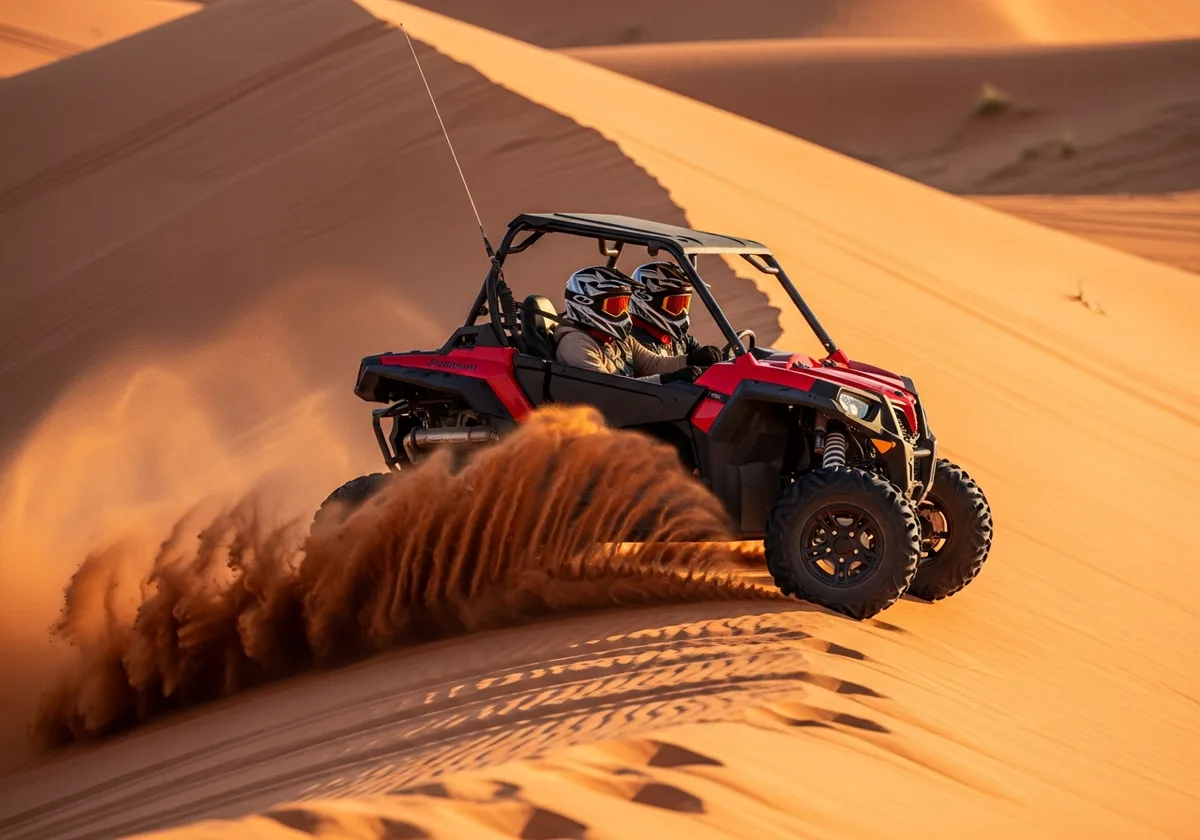
The briefing should also include an explanation of the buggy’s controls: how to brake effectively on sand, how to steer out of a soft patch, and what to avoid doing on a ridge. If the operator rushes through this or skips it entirely, consider that a red flag.
Tour route and duration
Not all desert routes are equal. Some tours stick to flat, groomed tracks that feel more like a safari drive than a buggy ride. Others take you into the deep dunes where the real challenge and thrill lie. Ask the operator for a rough outline of the route. Do they visit the big dunes? Is there a mix of fast stretches and technical sections? How much actual driving time is there versus waiting, briefing, and photo stops? A three-hour tour might only give you ninety minutes behind the wheel if the rest is taken up by transfers and breaks. Know what you are paying for in terms of seat time.
Duration vs. distance
Some tours advertise a distance covered, such as 30 or 40 kilometres. That sounds impressive, but it matters less than the terrain. Driving 30 km over soft, shifting sand is far more demanding and exciting than covering the same distance on a hard-packed track. Ask about the terrain type and the average speed. A tour that moves fast on flat ground can be fun for a while, but it lacks the technical challenge that makes dune buggy riding memorable.
Guide experience and group size
The quality of your guide can make or break the trip. An experienced guide knows the dunes intimately, can read the terrain, and adjusts the pace to the group’s skill level. They also handle recoveries quickly if someone gets stuck. Ask how long the guide has been working in that area and how many tours they lead per week. A guide who does this daily is far more reliable than someone who covers the route once a month.
Group size matters too. A small group of four to six buggies allows for a more personal experience and fewer delays. Large groups of ten or more buggies mean more waiting at each dune, more dust clouds, and less flexibility. If you value a smooth, uninterrupted ride, look for operators that limit group sizes.
What is included and what is extra
Tours often list a base price, but the extras can add up. Check whether the price includes hotel pickup and drop-off, water and refreshments, sandboarding or other activities, and photo or video service. Some operators charge separately for each add-on. Others bundle everything into a single fee. Clarify this before you book so there are no surprises at the end. Also ask about the cancellation policy. Desert tours can be called off due to weather, and a flexible policy protects you if plans change.

For a reliable experience, many riders check the Dune Buggy Rentals Dubai official site for tour details and vehicle specifications. That site gives a clear overview of what is offered, so you can compare it with other operators before making a decision.
Insurance and liability
Accidents happen, even on well-run tours. A minor collision or a rollover on a steep dune can damage the buggy or cause injury. Ask the operator what insurance they carry and what your liability is if you damage the vehicle. Some operators expect you to pay for repairs out of pocket. Others include basic cover in the price. Know the difference. If the operator is vague about insurance, that is a warning sign. A straightforward answer shows they have thought about the risks and have a system in place.
Environmental and cultural awareness
Dubai’s desert is a fragile ecosystem. Driving over vegetation, disturbing wildlife, or leaving litter harms the environment. Responsible operators follow designated trails, avoid sensitive areas, and enforce a leave-no-trace policy. Ask whether the tour respects these guidelines. Also, be aware that some desert areas are near residential zones or protected reserves. A good operator will know where they can and cannot drive and will explain the rules to you. Respect for the desert is a sign of a professional outfit that cares about its long-term reputation.
Reading the fine print
Before you pay, read the terms and conditions on the booking page or ask for them in writing. Look for clauses about age and height restrictions, driving licence requirements, and weight limits. Some buggies have a maximum driver weight that you need to meet. If you are bringing children, check the minimum age and whether they can ride as passengers. These details are often buried in small print, but they can stop you from joining the tour if you do not meet them.
If you want to see what a well-organised tour looks like, the Dune Buggy Rentals Dubai official site offers a clear breakdown of what to expect. It is a good starting point for understanding the standard of service that is available.
Trust your instincts
Finally, trust your gut. If an operator is evasive about any of the points above, or if their communication is slow and unhelpful, that is a sign to look elsewhere. A professional tour company will answer your questions clearly, provide photos or videos of their buggies, and give you a realistic picture of the experience. The desert is a beautiful but demanding place. You want to be in the hands of people who respect it and who have prepared for the unexpected.
Taking a few minutes to check these details before you book can save you time, money, and disappointment. The right tour will leave you with great memories and a desire to go back. The wrong one will leave you with a story you would rather forget. Choose carefully, and the dunes will reward you.
Dune Buggy Rentals Dubai on social media
 Facebook
 Instagram
 YouTube
 Pinterest